

- 오늘의 예배

- 오늘의 한글성경
- 오늘의 WEB성경
- English Bible Story
- 01.창조시대 EBS
- 02.족장시대 EBS
- 03.출애굽기 EBS
- 04.광야시대 EBS
- 05.정복시대 EBS
- 06.사사시대 EBS
- 07.통일왕국 EBS
- 08.분열왕국 EBS
- 09.포로시대 EBS
- 10.포로귀환 EBS
- 11.중간시대 EBS
- 12.예수시대 EBS
- 13.초대교회 EBS
-----Readed_count

-----Update
Mobile Bible, Mobile B-Story, Today's iWorship, 요리문답, Quiz추가&수정, Dictionary추가&수정





BIBLE - WEB,
KJV,
ASV(Quiz),
NIV,
개역한글KHRV(
120일1독,
1년1독,
권별,
성경통독
)
STUDY - 구절(WESLEY),
단락(MATTHEW),
테마별,
Dictionary - Chapter,
OT구약,
NT신약,
읽기(Wayne),
소요리,
대요리 문답,
신앙고백WCF
성경연대표
1.창조
2.족장
3.출애굽
4.광야
5.정복
6.사사
7.통일왕국
8.분열왕국
9.포로
10.포로귀환
11.중간
12.예수
13.초대교회
14.세계선교

JOHN 10: 1-21.
1 Verily, verily, I say to you (unto the parties whom he was addressing in the last section), He that entereth not by the door into the fold of the sheep, but climbeth up some other way, the same is a thief and a robber. (In this section Jesus proceeds to contrast his own care for humanity with that manifested by the Pharisees, who had just cast out the beggar. Old Testament prophecies were full of declarations that false shepherds would arise to the injury of God's flock (Ezekiel 34: 1-6; Jereremiah 23: 1-6; Zechariah 11: 4-11). But other prophecies spoke of the true shepherding of God and his Messiah (Psalm 23; 77: 20; Psalm 80: 1; 95: 7; Jereremiah 31: 10; Ezekiel 34: 31; Micah 7: 14; Isaiah 43: 11). The Pharisees were fulfilling the first line of prophecies, and Jesus was fulfilling the second. The sheepfolds of the East are roofless enclosures, made of loose stone, or surrounded by thornbushes. They have but one door. Jesus, the true shepherd, came in the proper and appointed way (and was the proper and appointed Way), thus indicating his office as shepherd. A thief steals by cunning in one's absence; a robber takes by violence from one's person. The Pharisees were both. They stole the sheep in Messiah's absence, and they slew Messiah when he came. They did not come in the ways ordained of God.)
2 But he that entereth in by the door is the shepherd of the sheep.
3 To him the porter openeth; and the sheep hear his voice: and he calleth his own sheep by name, and leadeth them out. (Several small flocks were sometimes kept in one field. The door was fastened from the inside with sticks or bars by the porter, who remained with the sheep during the night, and opened for the shepherds in the morning. The fold is the church, Christ is the door, the sheep are the disciples, and the shepherd is Christ. The porter is probably part of the drapery of the parable. If he represents anybody, it is God, who decides who shall enter through the door.)
4 When he hath put forth all his own, he goeth before them, and the sheep follow him: for they know his voice. (In the East, sheep are not driven, but led, and each sheep has and knows its name. Disciples also are led. There is no rough road or thorny path which the feet of Jesus have not first trod. The Pharisees had put forth the beggar to be rid of him; the true shepherd puts forth to feed.)
5 And a stranger will they not follow, but will flee from him: for they know not the voice of strangers. (The mingled flocks are separated by the calling voices of the several shepherds. The control of the Pharisees was not of this order. The authority of the synagogues had passed into their hands, and their rule was about the same as when thieves and robbers gained possession of the sheepfold. The people were disposed to flee from them--Matthew 9: 36.)
6 This parable spake Jesus unto them: but they understood not what things they were which he spake unto them. (The idea of loving care was so foreign to the nature of the Pharisees that they could not comprehend the figures which clothed such a thought. The word here translated "parable" is not the word "parabole," which John never uses, but the word " paroimia," which the synoptists never use. Paroimia means, literally, "beside the way," i. e., speech not of the common or direct form, i. e., a similitude or allegory.)
7 Jesus therefore said unto them again, Verily, verily, I say unto you, I am the door of the sheep. (Seeing that they did not understand the allegory, Jesus gives a twofold explanation of it found in John 10: 7-10 and 11-16.)
8 All that came before me are thieves and robbers: but the sheep did not hear them. (He speaks of the past, and refers to false Messiahs.)
9 I am the door: by me if any man enter in, he shall be saved, and shall go in and go out, and shall find pasture. (The door is here spoken of with reference to the sheep, and hence becomes a symbol of entrance into protection and shelter, or exit to liberty and plenty.)
10 The thief cometh not, but that he may steal, and kill, and destroy: I came that they may have life, and may have it abundantly. (Through the life of Jesus, as through a heavenly portal, men have entered upon true civilization, with its schools, colleges, railroads, telegraph, telephone, and innumerable privileges and liberties.)
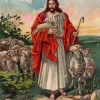
11 I am the good shepherd (The relations of Christ to his people are so abounding and complex as to overburden any parable which seeks to carry them. He is not only the passive doorway to life, but also the active, energizing force which leads his people through that doorway into life): the good shepherd layeth down his life for the sheep. (John 10: 11-14 set forth the perfect self-sacrifice through which the blessings of Christ have been obtained for us. The world-ruling spirit blesses itself through the sacrifice of the people; the Christ-spirit blesses the people through the sacrifice of self.)
12 He that is an hireling, and not a shepherd, whose own the sheep are not (shepherds were not, as a rule, owners of the sheep, but they were expected to love and care for them by reason of their office as shepherds), beholdeth the wolf coming, and leaveth the sheep, and fleeth, and the wolf snatcheth them, and scattereth them (the perils of the Oriental shepherd accord with the picture here given--Genesis 13: 5; 14: 12; 31: 39-40; 32: 7-8; 37: 33; Job 1: 7; 1 Samuel 17: 34-35):
13 he fleeth because he is a hireling, and careth not for the sheep. (He flees because he loves his wages rather than the flock.)
14 I am the good shepherd; and I know mine own, and mine own know me,
15 even as the Father knoweth me, and I know the Father (Our Lord's relationship to his flock is one of mutual knowledge and affection, and is far removed from the spirit of hire. The knowledge existing between disciple and Master springs from mutual acquaintanceship and love. Thus it is the same kind of knowledge which exists between Father and Son, though it is not of the same quality, being infinitely less full and perfect); and I lay down my life for the sheep. (The sacrifice of the good shepherd to shield his sheep has never been in vain.)
16 And other sheep I have, which are not of this fold: them also I must bring, and they shall hear my voice: and they shall become one flock, one shepherd. (Jesus was speaking to the Jews, who had been frequently spoken of in Scripture as God's flock. The other sheep were Gentiles. They are spoken of as scattered sheep, and not as flocks, because with them there was no unity. Here, as everywhere, the truth breaks through, revealing Christ as the world's Redeemer, who would break down the middle wall of partition between Jew and Gentile, and cause all true worshipers to have a common relationship to one Master.)
17 Therefore doth the Father love me, because I lay down my life, that I may take it again. (Jesus did not permit his life to be sacrificed so as to become cast away, but to be raised again as an earnest of the resurrection of all flesh.)
18 No one taketh it away from me, but I lay it down of myself. I have power to lay it down, and I have power to take it again. This commandment received I from my Father. (This shows that his death was voluntary, and with the resurrection which followed, it was in full and perfect accordance with his original commission or commandment from the Father.)
19 There arose a division again among the Jews because of these words. (The word "again" refers to John 7: 43; 9: 16.)
20 And many of them said, He hath a demon, and is mad; why hear ye him? (The theory that demons could produce supernatural effects (Matthew 12: 24) formed a handy device for explaining away the miracles of Christ.)
21 Others said, These are not the sayings of one possessed with a demon. Can a demon open the eyes of the blind? (These defenders refer to the well-remembered cure of the man born blind, and argue, as he did, that a demoniac could not work such a miracle. They fail, however, to make a positive confession of faith in Jesus.)
|
|||||||||||||||||||||||||||||||||||||||||||||||||||||||||||||||||||||||||||||||||||||||||||||||||||||||||||||||||||||||||||||||||||||||||||||||||||||||||||||||||||||||||||||||||||||||||||||||||||||||||||||||||||||||||||||||||||||||||||||||||||||||||||||||||||||||||||||||||||||||||||||||||||||||||||||||||||||||||||||||||||||||||||||||||||||||||||||||||||||||||||||||||||||||||||||||||||||||||||||||||||||||||||||||||||||||||||||||||||||||||||||||||||||||||||||















|
1창세기[Genesis] 2출애굽기[Exodus] 3레위기[Leviticus] 4민수기[Numbers] 5신명기[Deuteronomy] 6여호수아[Joshua] 7사사기[Judges] 8룻기[Ruth] 9사무엘상[1 Samuel] 10사무엘하[2 Samuel] 11열왕기상[1 Kings] 12열왕기하[2 Kings] 13역대상[1 Chronicles] 14역대하[2 Chronicles] 15에스라[Ezra] 16느헤미아[Nehemiah] 17에스더[Esther] 18욥기[Job] 19시편[Psalms] 20잠언[Proverbs] 21전도서[Ecclesiastes] 22아가[Song of Solomon] 23이사야[Isaiah] 24예레미야[Jeremiah] 5예레미아애가[Lamentations] 26에스겔[Ezekiel] 27다니엘[Daniel] 28호세아[Hosea] 29요엘[Joel] 30아모스[Amos] 31오바댜[Obadiah] 32요나[Jonah] 33미가[Micah] 34나훔[Nahum] 35하박국[Habakkuk] 36스바냐[Zephaniah] 37학개[Haggai] 38스가랴[Zechariah] 39말라기[Malachi] 40마태복음[Matthew] 41마가복음[Mark] 42누가복음[Luke] 43요한복음[John] 44사도행전[Acts] 45로마서[Romans] 46고린도전서[1 Corinthians] 47고린도후서[2 Corinthians] 48갈라디아서[Galatians] 49에베소서[Ephesians] 50빌립보서[Philippians] 51골로새서[Colossians] 52데살로니가전서[1 Thessalonian] 53데살로니가후서[2 Thessalonian] 54디모데전서[1 Timothy] 55디모데후서[2 Timothy] 56디도서[Titus] 57빌레몬서[Philemon] 58히브리서[Hebrews] 59야고보서[James] 60베드로전서[1 Peter] 61베드로후서[2 Peter] 62요한일서[1 John] 63요한이서[2 John] 64요한삼서[3 John] 65유다서[Jude] 66요한계시록[Revelation] |
