

- 신.구약 성경묵상

- 오늘의 한글성경
- 오늘의 WEB성경
- 메튜헨리 성경주석
- 존웨슬리 성경주석
- 영어성경읽기
- 성경만화-예수님일생
- 테마별 성경연구
- Wayne Blank Bible
- 낱말맞추기Puzzle
-----Readed_count

-----Update
요리문답
 , 2011.9.22- 한글과 Wayne Blank의 영문 QT 자료 업데이트 중... 업데이트 현황
장요약 및 묵상 주제와 각종 질문들 Quiz/Puzzle
How to find answer? - Only Overall Quiz.
1.

2. See Belowed 댓글[Comments]
Have a good time with JESUS.....

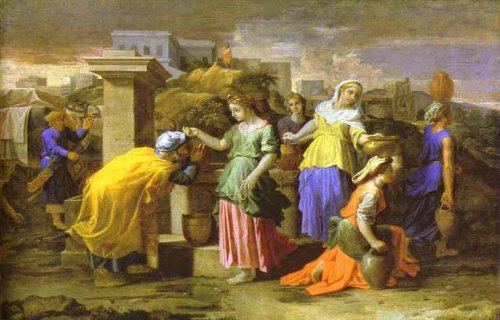


1. 아하수에로 왕의 왕후 와스디가 폐위한 까닭은 무엇인가?
▶ 장 요약
에1:1 아하수에로의 잔치
에1:10 와스디가 왕의 명령을 거절
에1:13 와스디가 폐위됨
Ahasuerus makes royal feasts for his nobles and people, 1-9. Vashti is sent for by the king, but refuses to come, 10-12. Vashti is disgraced; and a law made for the subjection of women, 13-22. The whole history of this book in its connected order, with the occurrences in the Persian empire at that time, will be found in the introduction: to which the reader is referred. Concerning the author of this book there are several opinions: some attribute the work to Ezra; some to one Joachim, a high priest; others, to the men of the Great Synagogue; and others to Mordecai. This latter is the most likely opinion: nor is that to be disregarded which gives to Mordecai for co-partner Ezra himself; though it is likely that the conclusion, from chap. ix. 23 to the end of the book, was inserted by another hand, and at a later time. Though some Christians have hesitated to receive the book of Esther into the sacred canon; yet it has always been received by the Jews, not only as perfectly authentic, but also as one of the most excellent of their sacred books. They call it hlygm megillah, THE VOLUME, by way of eminence; and hold it in the highest estimation. That it records the history of a real fact, the observation of the feast of Purim, to the present day, is a sufficient evidence. Indeed, this is one of the strongest evidences that any fact can have, viz., that, to commemorate it, a certain rite, procession, feast, or the like, should have been instituted at the time, which, without intermission, has been continued annually through every generation of that people, and in whatsoever place they or parties of them may have sojourned, to the present day. This is the fact concerning the feast of Purim here mentioned; which the Jews, in all places of their dispersion, have uninterruptedly celebrated, and do still continue to celebrate, from the time of their deliverance from the massacre intended by Haman to the present time. Copies of this book, widely differing from each other, exist in Hebrew, Chaldee, Syriac, Greek, and Latin. All these differ much from the Hebrew text, particularly the Greek and the Chaldee: the former has many additional paragraphs; and the latter, as it exists in the London Polyglot, contains five times more than the Hebrew text. To notice all the various readings, additions, and paraphrases, in the above copies, would require a volume of no inconsiderable magnitude. The reader who is curious may consult the above Polyglot. This book does not appear to be extant in Arabic, or in any other of the Oriental languages, besides the Hebrew and Syriac. The question may naturally arise, What was the original of this book? or, In what language was it written? Though learned men in general decide in favour of a Hebrew original, yet there are many reasons which might be urged in favour of the Persian. Several of the proper names are evidently of a Persian origin; and no doubt all the others are so; but they are so transformed by passing through the Hebrew, that they are no longer discernible. The Hebrew has even retained some of the Persian words, having done little else than alter the character, e.g., Esther, Mehuman, Mishak, Melzar, Vashti, Shushan, Pur, Darius, Paradise, &c., several of which will be noted in their proper places. The Targum in the London Polyglot is widely different from that in the Complutum, Antwerp, and Paris editions. The principal additions in the Greek are carefully marked in the London Polyglot, but are too long and too numerous to be inserted here. It is a singular circumstance that the name of God does not once occur in the whole of this book as it stands in Hebrew.
NIV (KJV) 에스더 01장 본문 (클릭)
BIBLE - WEB,
KJV,
ASV(Quiz),
NIV,
개역한글KHRV(
120일1독,
1년1독,
권별,
성경통독
)
STUDY - 구절(WESLEY),
단락(MATTHEW),
테마별,
읽기(Wayne),
소요리,
대요리 문답,
신앙고백WCF
Dictionary - Chapter,
OT구약,
NT신약,
성경연대표
1.창조
2.족장
3.출애굽
4.광야
5.정복
6.사사
7.통일왕국
8.분열왕국
9.포로
10.포로귀환
11.중간
12.예수
13.초대교회
14.세계선교

ASV Esther Chapter 01
1:1Now it came to pass in the days of Ahasuerus (this is Ahasuerus who reigned from India even unto Ethiopia, over a hundred and seven and twenty provinces), 1:2that in those days, when the king Ahasuerus sat on the throne of his kingdom, which was in Shushan the palace, 1:3in the third year of his reign, he made a feast unto all his princes and his servants; the power of Persia and Media, the nobles and princes of the provinces, being before him; 1:4when he showed the riches of his glorious kingdom and the honor of his excellent majesty many days, even a hundred and fourscore days. 1:5And when these days were fulfilled, the king made a feast unto all the people that were present in Shushan the palace, both great and small, seven days, in the court of the garden of the king's palace. 1:6There were hangings of white cloth, of green, and of blue, fastened with cords of fine linen and purple to silver rings and pillars of marble: the couches were of gold and silver, upon a pavement of red, and white, and yellow, and black marble. 1:7And they gave them drink in vessels of gold (the vessels being diverse one from another), and royal wine in abundance, according to the bounty of the king. 1:8And the drinking was according to the law; none could compel: for so the king had appointed to all the officers of his house, that they should do according to every man's pleasure. 1:9Also Vashti the queen made a feast for the women in the royal house which belonged to king Ahasuerus. 1:10On the seventh day, when the heart of the king was merry with wine, he commanded Mehuman, Biztha, Harbona, Bigtha, and Abagtha, Zethar, and Carcas, the seven chamberlains that ministered in the presence of Ahasuerus the king, 1:11to bring Vashti the queen before the king with the crown royal, to show the peoples and the princes her beauty; for she was fair to look on. 1:12But the queen Vashti refused to come at the king's commandment by the chamberlains: therefore was the king very wroth, and his anger burned in him. 1:13Then the king said to the wise men, who knew the times, (for so was the king's manner toward all that knew law and judgment; 1:14and the next unto him were Carshena, Shethar, Admatha, Tarshish, Meres, Marsena, and Memucan, the seven princes of Persia and Media, who saw the king's face, and sat first in the kingdom), 1:15What shall we do unto the queen Vashti according to law, because she hath not done the bidding of the king Ahasuerus by the chamberlains? 1:16And Memucan answered before the king and the princes, Vashti the queen hath not done wrong to the king only, but also to all the princes, and to all the peoples that are in all the provinces of the king Ahasuerus. 1:17For this deed of the queen will come abroad unto all women, to make their husbands contemptible in their eyes, when it shall be reported, The king Ahasuerus commanded Vashti the queen to be brought in before him, but she came not. 1:18And this day will the princesses of Persia and Media who have heard of the deed of the queen say the like unto all the king's princes. So will there arise much contempt and wrath. 1:19If it please the king, let there go forth a royal commandment from him, and let it be written among the laws of the Persians and the Medes, that it be not altered, that Vashti come no more before king Ahasuerus; and let the king give her royal estate unto another that is better than she. 1:20And when the king's decree which he shall make shall be published throughout all his kingdom (for it is great), all the wives will give to their husbands honor, both to great and small. 1:21And the saying pleased the king and the princes; and the king did according to the word of Memucan: 1:22for he sent letters into all the king's provinces, into every province according to the writing thereof, and to every people after their language, that every man should bear rule in his own house, and should speak according to the language of his people.
| |
|


|
1창세기[Genesis] 2출애굽기[Exodus] 3레위기[Leviticus] 4민수기[Numbers] 5신명기[Deuteronomy] 6여호수아[Joshua] 7사사기[Judges] 8룻기[Ruth] 9사무엘상[I Samuel] 10사무엘하[II Samuel] 11열왕기상[I Kings] 12열왕기하[II Kings] 13역대상[I Chronicles] 14역대하[II Chronicles] 15에스라[Ezra] 16느헤미아[Nehemiah] 17에스더[Esther] 18욥기[Job] 19시편[Psalms] 20잠언[Proverbs] 21전도서[Ecclesiastes] 22아가[Song of Solomon] 23이사야[Isaiah] 24예레미야[Jeremiah] 5예레미아애가[Lamentations] 26에스겔[Ezekiel] 27다니엘[Daniel] 28호세아[Hosea] 29요엘[Joel] 30아모스[Amos] 31오바댜[Obadiah] 32요나[Jonah] 33미가[Micah] 34나훔[Nahum] 35하박국[Habakkuk] 36스바냐[Zephaniah] 37학개[Haggai] 38스가랴[Zechariah] 39말라기[Malachi] 40마태복음[Matthew] 41마가복음[Mark] 42누가복음[Luke] 43요한복음[John] 44사도행전[Acts] 45로마서[Romans] 46고린도전서[I Corinthians] 47고린도후서[II Corinthians] 48갈라디아서[Galatians] 49에베소서[Ephesians] 50빌립보서[Philippians] 51골로새서[Colossians] 52데살로니가전서[I Thessalonian] 53데살로니가후서[2 Thessalonian] 54디모데전서[I Timothy] 55디모데후서[II Timothy] 56디도서[Titus] 57빌레몬서[Philemon] 58히브리서[Hebrews] 59야고보서[James] 60베드로전서[I Peter] 61베드로후서[II Peter] 62요한일서[I John] 63요한이서[II John] 64요한삼서[III John] 65유다서[Jude] 66요한계시록[Revelation] |
