

- 오늘의 예배

- 오늘의 한글성경
- 오늘의 WEB성경
- English Bible Story
- 01.창조시대 EBS
- 02.족장시대 EBS
- 03.출애굽기 EBS
- 04.광야시대 EBS
- 05.정복시대 EBS
- 06.사사시대 EBS
- 07.통일왕국 EBS
- 08.분열왕국 EBS
- 09.포로시대 EBS
- 10.포로귀환 EBS
- 11.중간시대 EBS
- 12.예수시대 EBS
- 13.초대교회 EBS
-----Readed_count
-----Update
Mobile Bible, Mobile B-Story, Today's iWorship, 요리문답, Quiz추가&수정, Dictionary추가&수정




BIBLE - WEB,
KJV,
ASV(Quiz),
NIV,
개역한글KHRV(
120일1독,
1년1독,
권별,
성경통독
)
STUDY - 구절(WESLEY),
단락(MATTHEW),
테마별,
Dictionary - Chapter,
OT구약,
NT신약,
읽기(Wayne),
소요리,
대요리 문답,
신앙고백WCF
성경연대표
1.창조
2.족장
3.출애굽
4.광야
5.정복
6.사사
7.통일왕국
8.분열왕국
9.포로
10.포로귀환
11.중간
12.예수
13.초대교회
14.세계선교

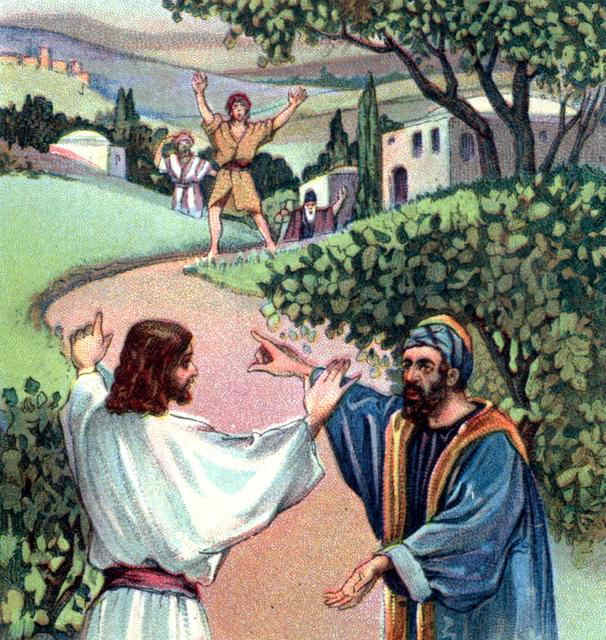
JOHN 4: 46-54.
46 He came therefore again (that is, in consequence of the welcome which awaited him) Unto Cana of Galilee, where he made the water wine (see page 114). And there was a certain nobleman (literally, "king's man:" a word which Josephus uses to designate a soldier, courtier, or officer of the king. He was doubtless an officer of Herod Antipas, tetrarch of Galilee. That it was Chuzas (Luke 8: 3 ) or Manaen (Acts 13: 1 ) is mere conjecture), whose son was sick at Capernaum. (The nouns in this verse are suggestive. We have a "nobleman," yet neither riches nor office lifted him above affliction; a "son," yet approaching an untimely death before his father; and both these parties came to sorrow in "Capernaum," the city of consolation. Neither circumstance, nor age, nor situation can guarantee joy. We must still be seeking Jesus.)
47 When he heard that Jesus was come out of Judaea into Galilee (and was therefore within not very easy reach of his sick child's bedside), he went unto him (literally, "he went away unto him." The verb contains a delicate suggestion that the father was reluctant to leave the son, even to seek aid) , and besought him that he would come down, and heal his son; for he was at the point of death. (Many, like this father, only seek divine aid when in the utmost extremity.)
48 Jesus therefore said unto him, Except ye see signs and wonders, ye will in no wise believe. (Though Jesus spoke these words to the nobleman, yet he also intended them for those who stood by, for he used the plural "ye." That the Galilæans in general deserved reproof for their lack of faith, is shown by the upbraiding words which he spoke concerning their cities (Matthew 11: 20-24 ). Jesus wanted men to believe in him because of his self-evidencing character and words (John 10: 38; 14: 11; 15: 22-24; 20: 29 ). But the people required to have their faith buttressed by miracles. There is a vast difference between believing in a man, and believing his credentials. Miracles were our Lord's credentials; his ministry among men can not be thought of without them; and when the Baptist's faith in Christ himself wavered, Jesus referred him to them (Matthew 11: 4, 5 ). See also John 10: 37 . The two words, "signs" and "wonders," indicate the two aspects of miracles. To the thoughtful they were signs or attestations that the one who performed them acted under the authority and approval of God; to all others they were mere wonders, which startled by their strangeness. Jesus was fresh from Sychar, where many required no other sign than his words.)
49 The nobleman saith unto him, Sir, come down ere my child die. (The father felt that the case was too urgent to admit of delay for argument. It seemed to him that he raced with death. His faith differed from that of the centurion in that he felt that the presence of Jesus was required to perform the miracle. He also regarded the powers of Jesus as limited to the living; but we must not censure his faith as particularly weak, for in both these respects it resembled that possessed by Mary and Martha--John 11: 21, 22, 32, 39. )
50 Jesus saith unto him, Go thy way; thy son liveth. (Jesus enlarges the nobleman's conception of his divine power by showing him that his words take effect without regard to distance.) The man believed the word that Jesus had spake unto him, and he went his way.
51 And as he was now going down, his servants met him, saying, that his son lived.
52 So he inquired of them the hour when he began to amend. (More correctly, "began to get better." The father expected that the fever would depart slowly, as it usually does; but the reply of the servants shows that he was mistaken.) They said therefore unto him, Yesterday at the seventh hour the fever left him. (Though for harmonistic reasons we are persuaded that John himself uses the Roman method of computing the hours, which would make the phrase here mean 7 P. M., yet since the phraseology here is not his, but that of the Galilæan servants, we take it to mean 1 P. M., for they would use the Jewish method of computing from sunset to sunset. If both parties had started at once, they would have met before sundown, as each had but eleven miles to traverse. But it is more reasonable to suppose that the wearied but now believing father sought some refreshment and a brief rest before returning, and that the servants tarried awhile to see if the child's recovery was permanent. This would lead to their meeting after sundown, at which time, according to the invariable custom, they would call the previous period of daylight "yesterday.")
53 So the father knew that it was at that hour in which Jesus said unto him, Thy son liveth: and himself believed, and his whole house. (We note here a growth in the faith of the nobleman. He first believed in the power of Jesus' presence, then in the power of Jesus' word, and finally he believed generally in Jesus, and his household shared his belief. This is the first mention of a believing household; for others see Acts 16: 14, 15, 34; 18: 8. )
54 This is again the second sign that Jesus did, having come out of Judæa into Galilee. (One small sign and many converted in Samaria; two great miracles and one household converted in Galilee. Such is the record. Jesus doubtless had many other converts in Galilee, but it is often true that the greater labor brings the lesser harvest.)
|
|||||||||||||||||||||||||||||||||||||||||||||||||||||||||||||||||||||||||||||||||||||||||||||||||||||||||||||||||||||||||||||||||||||||||||||||||||||||||||||||||||||||||||||||||||||||||||||||||||||||||||||||||||||||||||||||||||||||||||||||||||||||||||||||||||||||||||||||||||||||||||||||||||||||||||||||||||||||||||||||||||||||||||||||||||||||||||||||||||||||||||||||||||||||||||||||||||||||||||||||||||||||||||||||||||||||||||||||||||||||||||||||||||||||||||||






|
1창세기[Genesis] 2출애굽기[Exodus] 3레위기[Leviticus] 4민수기[Numbers] 5신명기[Deuteronomy] 6여호수아[Joshua] 7사사기[Judges] 8룻기[Ruth] 9사무엘상[1 Samuel] 10사무엘하[2 Samuel] 11열왕기상[1 Kings] 12열왕기하[2 Kings] 13역대상[1 Chronicles] 14역대하[2 Chronicles] 15에스라[Ezra] 16느헤미아[Nehemiah] 17에스더[Esther] 18욥기[Job] 19시편[Psalms] 20잠언[Proverbs] 21전도서[Ecclesiastes] 22아가[Song of Solomon] 23이사야[Isaiah] 24예레미야[Jeremiah] 5예레미아애가[Lamentations] 26에스겔[Ezekiel] 27다니엘[Daniel] 28호세아[Hosea] 29요엘[Joel] 30아모스[Amos] 31오바댜[Obadiah] 32요나[Jonah] 33미가[Micah] 34나훔[Nahum] 35하박국[Habakkuk] 36스바냐[Zephaniah] 37학개[Haggai] 38스가랴[Zechariah] 39말라기[Malachi] 40마태복음[Matthew] 41마가복음[Mark] 42누가복음[Luke] 43요한복음[John] 44사도행전[Acts] 45로마서[Romans] 46고린도전서[1 Corinthians] 47고린도후서[2 Corinthians] 48갈라디아서[Galatians] 49에베소서[Ephesians] 50빌립보서[Philippians] 51골로새서[Colossians] 52데살로니가전서[1 Thessalonian] 53데살로니가후서[2 Thessalonian] 54디모데전서[1 Timothy] 55디모데후서[2 Timothy] 56디도서[Titus] 57빌레몬서[Philemon] 58히브리서[Hebrews] 59야고보서[James] 60베드로전서[1 Peter] 61베드로후서[2 Peter] 62요한일서[1 John] 63요한이서[2 John] 64요한삼서[3 John] 65유다서[Jude] 66요한계시록[Revelation] |
