

- 오늘의 예배

- 오늘의 한글성경
- 오늘의 WEB성경
- English Bible Story
- 01.창조시대 EBS
- 02.족장시대 EBS
- 03.출애굽기 EBS
- 04.광야시대 EBS
- 05.정복시대 EBS
- 06.사사시대 EBS
- 07.통일왕국 EBS
- 08.분열왕국 EBS
- 09.포로시대 EBS
- 10.포로귀환 EBS
- 11.중간시대 EBS
- 12.예수시대 EBS
- 13.초대교회 EBS
-----Readed_count

-----Update
Mobile Bible, Mobile B-Story, Today's iWorship, 요리문답, Quiz추가&수정, Dictionary추가&수정





BIBLE - WEB,
KJV,
ASV(Quiz),
NIV,
개역한글KHRV(
120일1독,
1년1독,
권별,
성경통독
)
STUDY - 구절(WESLEY),
단락(MATTHEW),
테마별,
Dictionary - Chapter,
OT구약,
NT신약,
읽기(Wayne),
소요리,
대요리 문답,
신앙고백WCF
성경연대표
1.창조
2.족장
3.출애굽
4.광야
5.정복
6.사사
7.통일왕국
8.분열왕국
9.포로
10.포로귀환
11.중간
12.예수
13.초대교회
14.세계선교

LUKE 1: 26-38.
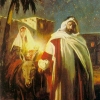
26 Now in the sixth month (this is the passage from which we learn that John was six months older than Jesus) the angel Gabriel was sent from God unto a city of Galilee, named Nazareth (Luke alone tells us where Mary lived before the birth of Jesus. That Nazareth was an unimportant town is shown by the fact that it is mentioned nowhere in the Old Testament, nor in the Talmud, nor in Josephus, who mentions two hundred four towns and cities of Galilee. The way in which Luke introduces Galilee and Nazareth shows that he wrote to those unfamiliar with Palestine. Compare the conversation at (John 1: 45, 46). Galilee comprised the lands of Zebulun, Naphtali, Issachar and Asher. It was rich in trees and pastures. Its people were hardy and warlike),
27 to a virgin betrothed to a man (In the East, the betrothal or engagement was entered into with much ceremony, and usually took place a year before the marriage. It was so sacred that the parties entering into it could not be separated save by a bill of divorcement -- (Matthew 1: 19) to a man whose name was Joseph, of the house of David (that is, Joseph was of the house of David); and the virgin's name was Mary. (The same as Miriam (Exodus 15: 20).
28 And he came in unto her, and said, Hail, thou that art highly favored, the Lord is with thee.
29 But she was greatly troubled at the saying, and cast in her mind what manner of salutation this might be. (Whether it meant a present sorrow or joy, for God's salutations all mean joy, but usually is in the distant future -- (Hebrews 12: 11; 2 Corinthians 4: 17, 18).
30 And the angel said unto her, Fear not (the gospel is full of "Fear nots"; it teaches us that perfect love which casts out fear -- (1 John 4: 18), for thou hast found favour with God.
31 And, behold, thou shalt conceive in thy womb, and bring forth a son, and shalt call his name JESUS. (The same as Hoshea Numbers 13: 8), Joshua, and Jeshua (Zechariah 3: 1). It means the "salvation of Jehovah." It was one of the most common Jewish names, but was given to Jesus by divine direction because of its fitness -- (Matthew 1: 21).
32 He shall be great, and shall be called the Son of the Most High (A common Hebrew way of saying "He shall be." Even the evil spirits called Jesus by this name -- (Mark 5: 7 ): and the Lord God shall give unto him [he shall not receive his kingdom as a bribe from Satan (Matthew 4: 9), nor win it by force of arms (John 18: 10, 11, 36; Matthew 26: 53), but as the gift of God -- (Acts 2: 32� 36; Philippians 2: 9� 11; Matthew 28: 18) the throne (Psalm. 132: 11) of his father David (this must refer to Mary's descent from David, for she is expressly told in (Luke 1: 35) that her son would have no earthly father):
33 and he shall reign over the house of Jacob (That is, over the family or descendants of Jacob; but the expression includes his spiritual, rather than his carnal, descendants (Galations 3: 7, 28, 29). This name therefore includes the Gentiles as the name of a river includes the rivers which flow into it forever (Daniel 2: 44; 7: 13, 14, 27; Micah 4: 7; Psalm. 45: 6; Hebrews 1: 8; Revelation 11: 15); and of his kingdom there shall be no end. (Isaiah. 7: 9). Christ shall resign his mediatorial kingdom to the Father at the close of this dispensation (1 Corinthians. 15: 24-28); but as being one with his Father he shall rule forever.)
34 And Mary unto the angel, How shall this be (Her question indicates surprise, not disbelief. Unlike Zacharias, she asked no sign. The youthful village maiden, amid her humble daily duties, shows a more ready faith in the far more startling message than the aged priest in the holy place of the temple in the atmosphere of the sacred incense), seeing I know not a man?
35 And the angel answered and said unto her, The Holy Spirit shall come upon thee, and the power of the Most High shall overshadow (the Spirit of God is thus spoken of as "brooding over" or overshadowing creation to develop it -- (Genesis 1: 2) thee (This indicates that the Holy Spirit himself created the body of Christ (Hebrews 10: 5). The spirit, or divine nature, of Christ was from the beginning, and was unbegotten--that is, in the sense of being created]: wherefore also the holy thing. (the body of Jesus -- (Hebrews 7: 26; 1 Peter 2: 22) which is begotten (Galations 4: 4) shall be called the Son of God. (As the Evangelist is here talking about the bodily and human nature of Jesus, it is possible that he may here speak of Jesus as the Son of God in the same sense in which he called Adam the son of God (Luke 3: 38 ) that is, his body and human nature were the direct and miraculous production of the divine power. If so, we find Jesus called the Son of God in three several senses: 1. Here, because he was born into the world in a supernatural manner. 2. Elsewhere, because by his resurrection he was begotten from the dead (Romans 1: 4; Acts 13: 33; Psalm 2: 7). 3. Also elsewhere, because of the eternal, immutable, and unparalleled relationship which he sustains to the Father -- (John 1: 1, 14, 18).
36 And behold, Elisabeth thy kinswoman, she also hath conceived a son in her old age. (The angel tells of Elisabeth's condition, that it may encourage the faith of Mary, and lead her to trust in Him with whom nothing is impossible -- (Jeremiah 32: 17, 27; Genesis 18: 14; Matthew 19: 26).
37 For no word from God shall be void of power. (Isaiah 55: 11).
38 And Mary said, Behold, the handmaid (Literally, "slave" or "bondservant." It is the feminine form of the word which Paul so often applies to himself (Romans 1: 1; Titus 1: 1). Mary uses it to indicate her submissive and obedient spirit) of the Lord; be it unto me according to thy word. (In great faith she not only believes the promise, but prays for its fulfillment. She bowed to the will of God like Eli (1 Samuel 3: 18), and became the mother of Him who prayed, "Not my will, but thine, be done"-- (Luke 22: 42). And the angel departed from her.
|
|||||||||||||||||||||||||||||||||||||||||||||||||||||||||||||||||||||||||||||||||||||||||||||||||||||||||||||||||||||||||||||||||||||||||||||||||||||||||||||||||||||||||||||||||||||||||||||||||||||||||||||||||||||||||||||||||||||||||||||||||||||||||||||||||||||||||||||||||||||||||||||||||||||||||||||||||||||||||||||||||||||||||||||||||||||||||||||||||||||||||||||||||||||||||||||||||||||||||||||||||||||||||||||||||||||||||||||||||||||||||||||||||||||||||||||












|
1창세기[Genesis] 2출애굽기[Exodus] 3레위기[Leviticus] 4민수기[Numbers] 5신명기[Deuteronomy] 6여호수아[Joshua] 7사사기[Judges] 8룻기[Ruth] 9사무엘상[1 Samuel] 10사무엘하[2 Samuel] 11열왕기상[1 Kings] 12열왕기하[2 Kings] 13역대상[1 Chronicles] 14역대하[2 Chronicles] 15에스라[Ezra] 16느헤미아[Nehemiah] 17에스더[Esther] 18욥기[Job] 19시편[Psalms] 20잠언[Proverbs] 21전도서[Ecclesiastes] 22아가[Song of Solomon] 23이사야[Isaiah] 24예레미야[Jeremiah] 5예레미아애가[Lamentations] 26에스겔[Ezekiel] 27다니엘[Daniel] 28호세아[Hosea] 29요엘[Joel] 30아모스[Amos] 31오바댜[Obadiah] 32요나[Jonah] 33미가[Micah] 34나훔[Nahum] 35하박국[Habakkuk] 36스바냐[Zephaniah] 37학개[Haggai] 38스가랴[Zechariah] 39말라기[Malachi] 40마태복음[Matthew] 41마가복음[Mark] 42누가복음[Luke] 43요한복음[John] 44사도행전[Acts] 45로마서[Romans] 46고린도전서[1 Corinthians] 47고린도후서[2 Corinthians] 48갈라디아서[Galatians] 49에베소서[Ephesians] 50빌립보서[Philippians] 51골로새서[Colossians] 52데살로니가전서[1 Thessalonian] 53데살로니가후서[2 Thessalonian] 54디모데전서[1 Timothy] 55디모데후서[2 Timothy] 56디도서[Titus] 57빌레몬서[Philemon] 58히브리서[Hebrews] 59야고보서[James] 60베드로전서[1 Peter] 61베드로후서[2 Peter] 62요한일서[1 John] 63요한이서[2 John] 64요한삼서[3 John] 65유다서[Jude] 66요한계시록[Revelation] |
