

- 오늘의 예배

- 오늘의 한글성경
- 오늘의 WEB성경
- English Bible Story
- 01.창조시대 EBS
- 02.족장시대 EBS
- 03.출애굽기 EBS
- 04.광야시대 EBS
- 05.정복시대 EBS
- 06.사사시대 EBS
- 07.통일왕국 EBS
- 08.분열왕국 EBS
- 09.포로시대 EBS
- 10.포로귀환 EBS
- 11.중간시대 EBS
- 12.예수시대 EBS
- 13.초대교회 EBS
-----Readed_count
-----Update
Mobile Bible, Mobile B-Story, Today's iWorship, 요리문답, Quiz추가&수정, Dictionary추가&수정



BIBLE - WEB,
KJV,
ASV(Quiz),
NIV,
개역한글KHRV(
120일1독,
1년1독,
권별,
성경통독
)
STUDY - 구절(WESLEY),
단락(MATTHEW),
테마별,
Dictionary - Chapter,
OT구약,
NT신약,
읽기(Wayne),
소요리,
대요리 문답,
신앙고백WCF
성경연대표
1.창조
2.족장
3.출애굽
4.광야
5.정복
6.사사
7.통일왕국
8.분열왕국
9.포로
10.포로귀환
11.중간
12.예수
13.초대교회
14.세계선교

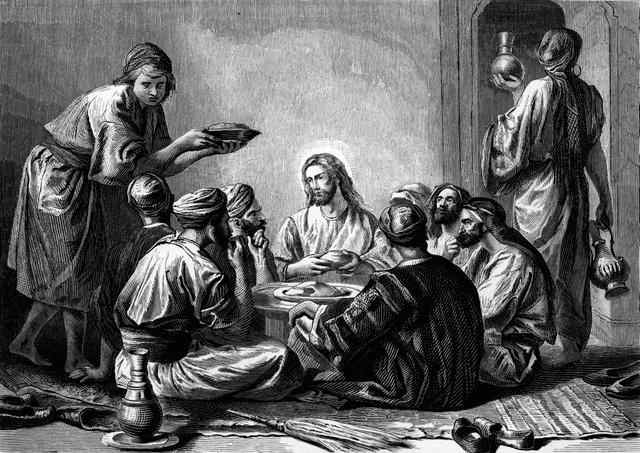
MATTHEW 9: 10-17; MARK 2: 15-22; LUKE 5: 29-39.
Luke 5: 29 And Levi (another name for the apostle Matthew) made him a great feast in his house:
Mark 2: 15 And it came to pass, that he was sitting { as he sat} at meat in the {his}house, and there was a great multitude of publicans (Matthew had invited his old friends) and of others and behold, many publicans and sinners came and sat down with Jesus and his disciples. for there were many, that were sitting at meat with them. and they followed him.
Luke 5: 30 And the Pharisees and their scribes {the scribes of the Pharisees,} (that is, the scribes which were of their party or sect) when they saw that he was eating with the sinners and publicans, murmured against his disciples, saying, {they said} unto his disciples, Why do ye eat and drink with the publicans and sinners? Why eateth your Teacher with the publicans and sinners? How is it that he eateth and drinketh with publicans and sinners? (From their standpoint, the question was natural enough. No strict Jew could eat with a Gentile (Acts 11: 3; Galatians 2: 12), and Matthew's guests were classed with the heathen.)
Matthew 9: 12 But {Mark 2: 17 And} when he Jesus heard it, he answering said {saith} unto them, They that are whole {in health} have no need of a physician, but they that are sick.
13 But go ye and learn what this meaneth, I desire mercy, and not sacrifice (For an explanation of this passage, see page 212. To mercifully help sinners to repent was more precious to God than sacrifice): for
Luke 5: 32 I am not come {I came not} to call the righteous, but sinners. to repentance. (Being charged with recklessly consorting with sinners, it was necessary for Jesus to vindicate himself, else his influence would be damaged; hence he presents three arguments: 1. His office being analogous to that of a physician, required him to visit the sin-sick. 2. God himself commended such an act of mercy, and preferred it to sacrifice; 3. As he came to call sinners to repentance, he must therefore go to the sinners. These arguments do not justify us in keeping company with bad people for any other purpose than to do them good--that is, as their soul's physician. When he used the word "righteous," Jesus did not mean to admit that any were so righteous as to need no Saviour; he merely quoted the Pharisees at the value which they set upon themselves.)
Mark 2: 18 And John's disciples and the Pharisees were fasting: and they come {Matthew 9: 14 Then come to him the disciples of John,}
Luke 5: 33 And they said {say} unto him, saying, The disciples of John fast often, and make supplications (single penitential prayers with their fasting); likewise also the disciples of the Pharisees; but thine eat and drink. (As John the Baptist observed one almost continual fast, his diet being locusts and wild honey, his disciples naturally had great respect for that rite, and noted the lack of its observance by Jesus as an apparent defect in his character. They were honest inquirers, and Jesus answered them respectfully as such.) Why do we and the Pharisees {John's disciples and the disciples of the Pharisees} fast oft, but thy disciples fast not?
Matthew 9: 15 And Jesus said unto them, Can ye make the sons of the bride-chamber fast, {mourn}, as long as {while} the bridegroom is with them? as long as they have with bridegroom with them, the cannot fast. (The bridegroom's friends were called "sons of the bride-chamber." They went with the bridegroom to the bride's house, and escorted her to her new home. Arriving at the bridegroom's house, a feast usually lasting seven days ensued (Matthew 22: 4; Luke 14: 8; John 2: 8, 9). Mourning and fasting would therefore ill befit such an occasion.)
Luke 5: 35 But the days will come; and when the bridegroom shall be taken from them, and then will they fast in that day. {those days.} (Jesus here foretells the removal of his visible presence from his disciples by his ascension. His words predict but do not command a fast. He prescribed no stated fasts, and the apostolic church kept none. History shows that prescribed fasts become formal and tend to Phariseeism.)
36 And he spake also a parable unto them: No man rendeth a piece from a new garment and putteth it upon an old garment, else he will rend the new, and also the piece from the new will not agree with the old.
Matthew 9: 16 And no man putteth {seweth} a piece of undressed cloth on { upon} an old garment; for {else} that which should fill it up taketh from it, {from the garment,} the new from the old, and a worse rent is made. (Jesus justifies the conduct of his disciples by an appeal to the principles of the new dispensation, by which they were governed. The disciples of John looked upon Jesus as a reformer of Judaism, but he corrects their false impressions. To tear the new dispensation to pieces to renovate or embellish the old would be to injure the new and to destroy the old. By the process of fulling or dressing, new cloth was cleansed and shrunk so as to become more compact. The new cloth, therefore, had in it, so to speak, a life-element, and in its movement while shrinking it would tear the weaker fiber of the old cloth to which it was sewed, and thus enlarge the rent. The new dispensation could have rites and forms of its own, but could not conform to the rites of the Pharisees. If the conduct of his disciples had made a rent in the rabbinical traditions with regard to fasting, Jesus could not so modify the conduct of his disciples as to patch the rent without injuring the moral sense of his disciples, and without making Phariseeism a more meaningless hypocrisy than ever.)
Mark 2: 22 And no man putteth {Matthew 9: 17 Neither do men put} new wine into old wine-skins: else the the new wine will burst the skins, and the wine itself will be {is} spilled, and the wine perisheth, and the skins: burst, and the skins will perish. but they put new wine {new wine must be put} into fresh wine-skins.and both are preserved. (This parable is also an illustration of the principles set forth above. Wine was then stored in casks of skin--usually hides of goats. Wine-skins, newly made, were elastic, and would expand to accommodate the fermentation of the new wine within. But the old wine-skins were stiff and of little strength, and would burst if fermenting liquid were confined within them.)
Luke 5: 39 And no man having drunk old wine desireth new; for he saith, The old is good. (The thought here is that as wine should be put in skins suited for it, and as, at an entertainment, the different kinds of wine should be served in appropriate succession; so, fasting should be observed on suitable occasions--not, for instance, at a wedding.)
|
|||||||||||||||||||||||||||||||||||||||||||||||||||||||||||||||||||||||||||||||||||||||||||||||||||||||||||||||||||||||||||||||||||||||||||||||||||||||||||||||||||||||||||||||||||||||||||||||||||||||||||||||||||||||||||||||||||||||||||||||||||||||||||||||||||||||||||||||||||||||||||||||||||||||||||||||||||||||||||||||||||||||||||||||||||||||||||||||||||||||||||||||||||||||||||||||||||||||||||||||||||||||||||||||||||||||||||||||||||||||||||||||||||||||||||||












|
1창세기[Genesis] 2출애굽기[Exodus] 3레위기[Leviticus] 4민수기[Numbers] 5신명기[Deuteronomy] 6여호수아[Joshua] 7사사기[Judges] 8룻기[Ruth] 9사무엘상[1 Samuel] 10사무엘하[2 Samuel] 11열왕기상[1 Kings] 12열왕기하[2 Kings] 13역대상[1 Chronicles] 14역대하[2 Chronicles] 15에스라[Ezra] 16느헤미아[Nehemiah] 17에스더[Esther] 18욥기[Job] 19시편[Psalms] 20잠언[Proverbs] 21전도서[Ecclesiastes] 22아가[Song of Solomon] 23이사야[Isaiah] 24예레미야[Jeremiah] 5예레미아애가[Lamentations] 26에스겔[Ezekiel] 27다니엘[Daniel] 28호세아[Hosea] 29요엘[Joel] 30아모스[Amos] 31오바댜[Obadiah] 32요나[Jonah] 33미가[Micah] 34나훔[Nahum] 35하박국[Habakkuk] 36스바냐[Zephaniah] 37학개[Haggai] 38스가랴[Zechariah] 39말라기[Malachi] 40마태복음[Matthew] 41마가복음[Mark] 42누가복음[Luke] 43요한복음[John] 44사도행전[Acts] 45로마서[Romans] 46고린도전서[1 Corinthians] 47고린도후서[2 Corinthians] 48갈라디아서[Galatians] 49에베소서[Ephesians] 50빌립보서[Philippians] 51골로새서[Colossians] 52데살로니가전서[1 Thessalonian] 53데살로니가후서[2 Thessalonian] 54디모데전서[1 Timothy] 55디모데후서[2 Timothy] 56디도서[Titus] 57빌레몬서[Philemon] 58히브리서[Hebrews] 59야고보서[James] 60베드로전서[1 Peter] 61베드로후서[2 Peter] 62요한일서[1 John] 63요한이서[2 John] 64요한삼서[3 John] 65유다서[Jude] 66요한계시록[Revelation] |
